A new venture from e-GMAT
Fifteen years ago, we started e-GMAT with a conviction that felt almost naive at the time: that a course could know its student — what they’ve mastered, where they’re stuck, and precisely what to do next. You, our students and alumni, turned that conviction into thousands of success stories. Along the way we built PACE, Scholaranium, and a mastery-based way of learning that many of you now describe to friends as simply “the e-GMAT way.”
Today we get to share something we’ve quietly been building for over a year: PRiSM Learning — an AI-powered prep platform for the Digital SAT, created by the two of us, Payal Tandon and Rajat Sadana. It is the e-GMAT methodology, rebuilt from scratch for a new exam and a new generation — quite literally, because our first student was our own daughter.
It started at our dinner table
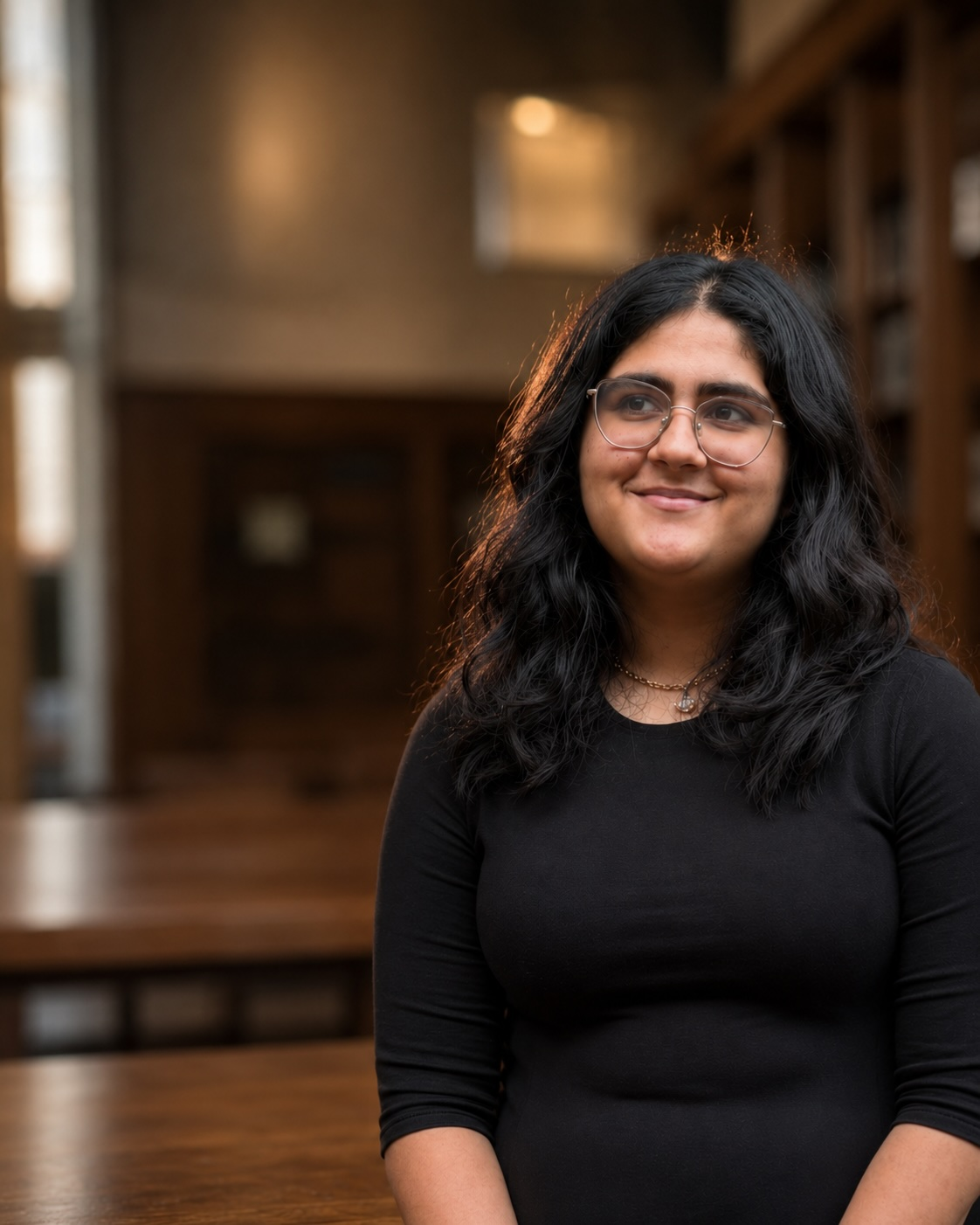
When our daughter Palak began preparing for the SAT, we did what any parents in our position would do: we looked at every prep option out there. Nothing measured up to what we knew was possible. So we built her a course ourselves — the same first-principles instruction, adaptive sequencing, and relentless measurement we’d spent fifteen years refining for the GMAT, re-engineered for the Digital SAT.
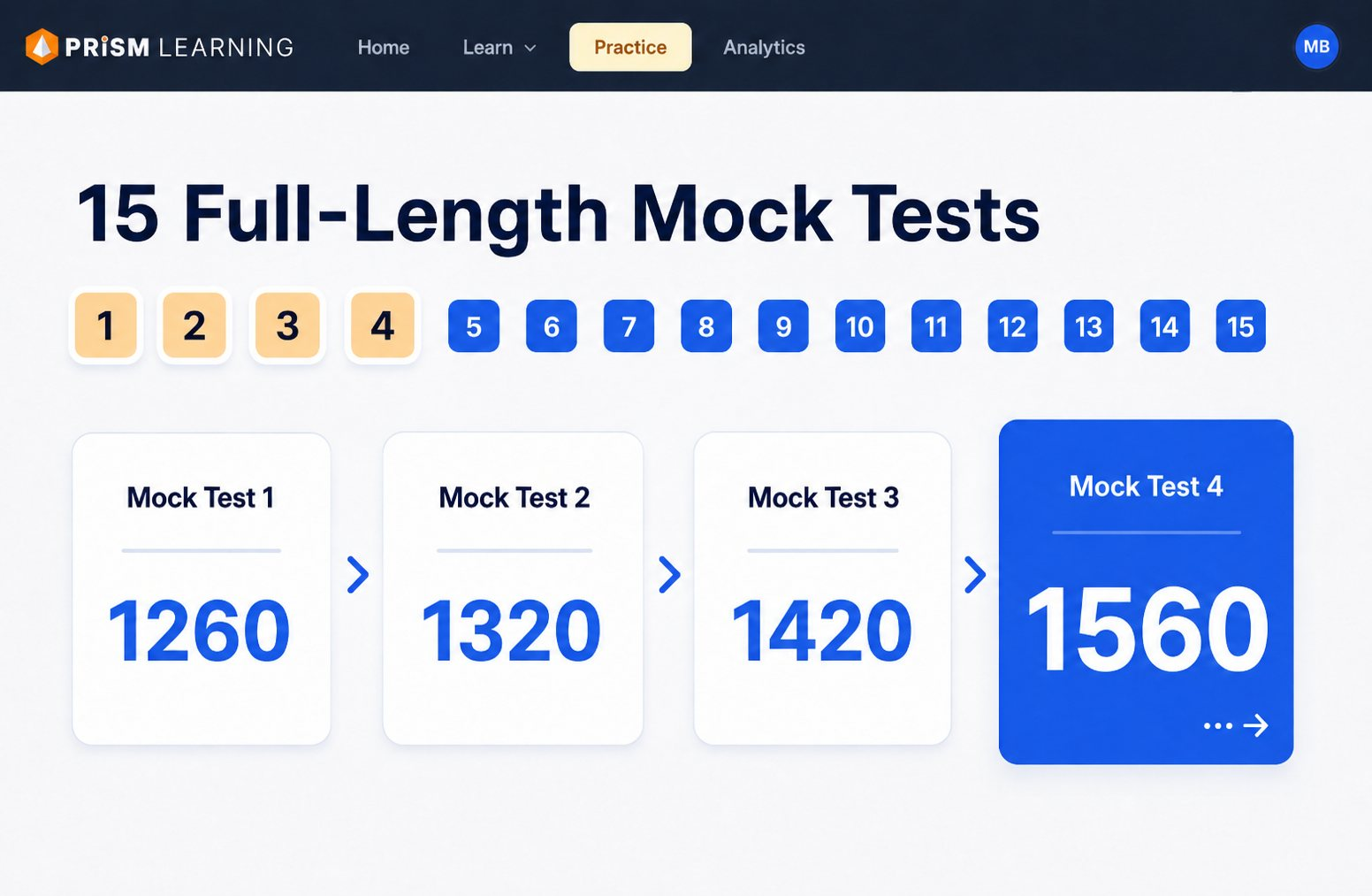
Palak scored a 1560 and is now at Johns Hopkins. That course, matured and expanded, became PRiSM — Personalized, Responsive, Impactful, Smart Methodology. The full story is on our About Us page.
The same learning loop you know — sharpened
If you’ve studied with us, the architecture will feel familiar: diagnose first, learn from first principles, then cement until mastery is proven. On PRiSM, that loop runs end to end from day one.
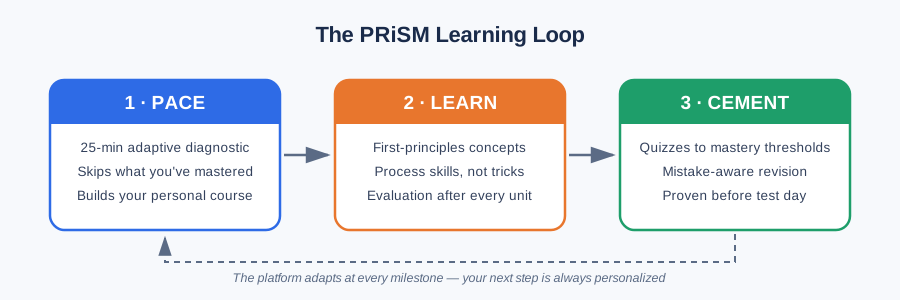
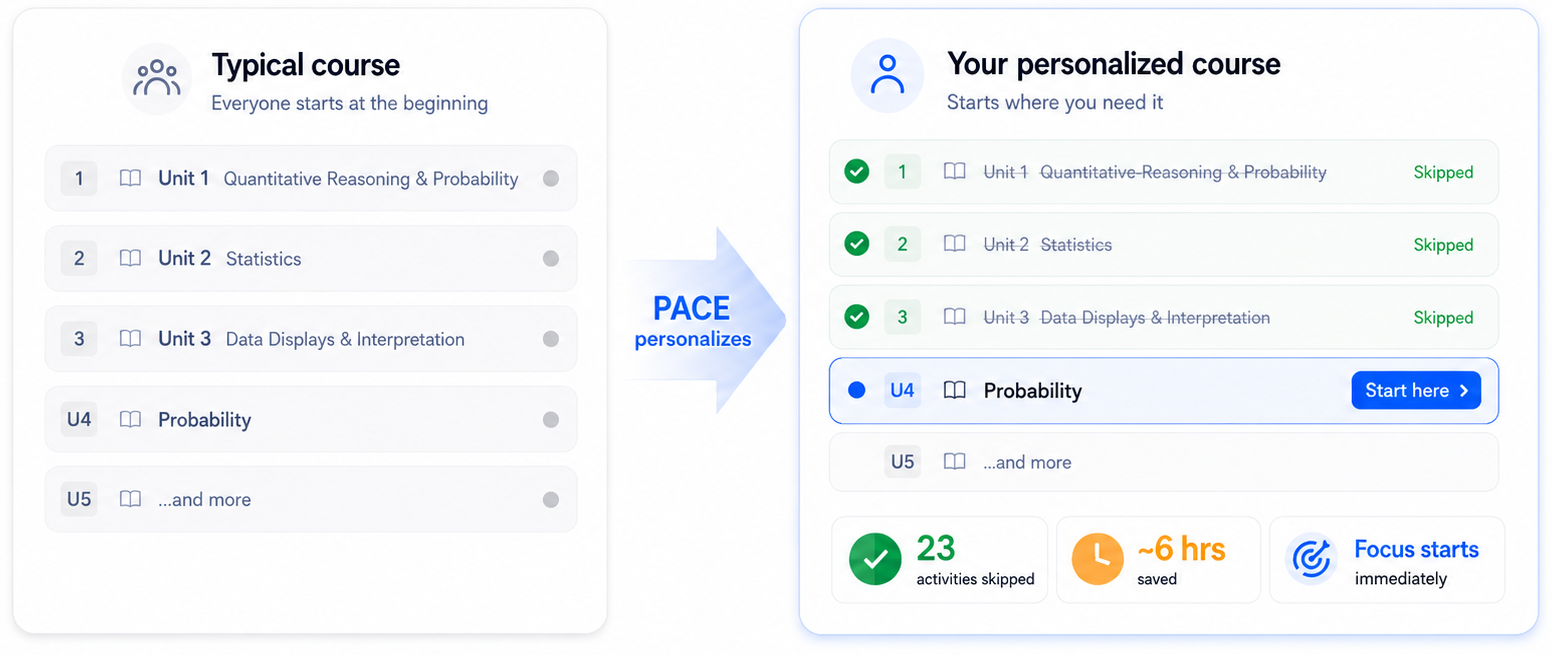
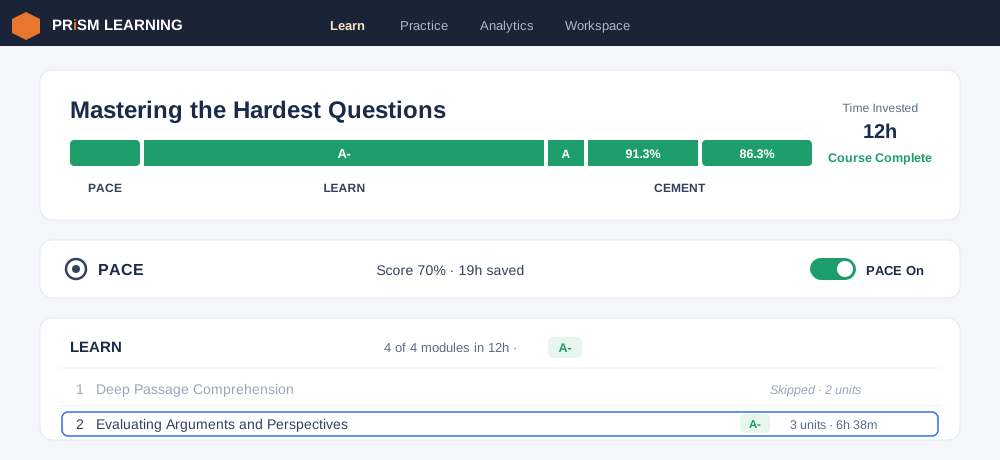
PACE is enabled for both courses — SAT Math and SAT Reading & Writing. A 25-minute adaptive diagnostic maps what a student already knows; PACE then skips the mastered material outright and builds a course around what actually needs work. Across a typical prep timeline, that’s 100+ hours a student never has to spend relearning things they already know.
Mocks at a scale we’ve never offered before
We have always believed practice tests should be diagnostic instruments, not just scoreboards. PRiSM ships with 15 full-length adaptive practice tests — scored within ±20 points of the real Digital SAT — plus 80 sectional mocks for pressure-testing Math or Reading & Writing one module at a time.
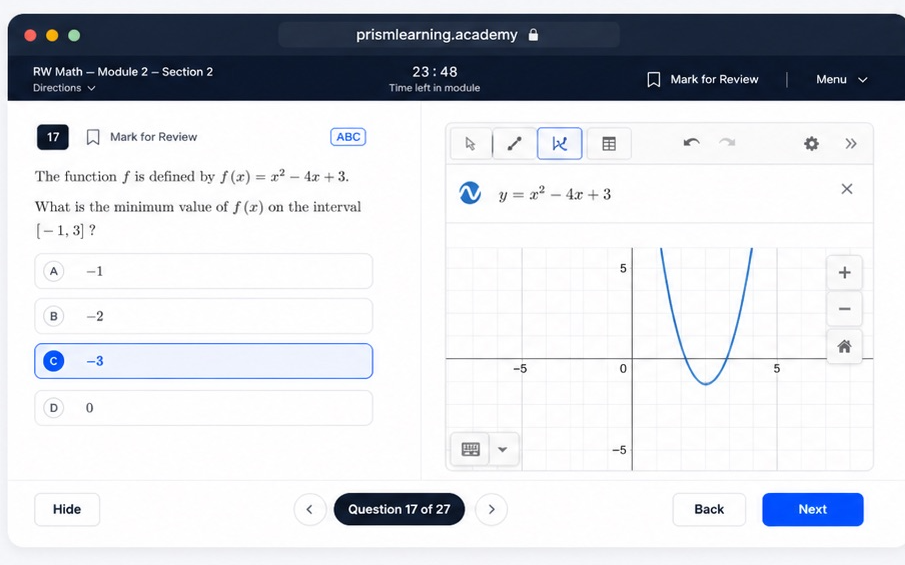
The test engine reproduces Bluebook with obsessive fidelity: module-adaptive routing, the built-in Desmos calculator, highlighting and annotation, answer cross-out, and timed breaks. Nothing about the real exam should feel new on test day. See the full mock experience here.
Analytics beyond Scholaranium
Scholaranium taught us that data changes behavior only when it explains the why. PRiSM pushes that idea further than we ever have: every single miss is diagnosed across four behaviors — Ability, Speed, Judgment, and Careless — because a concept gap, a timing collapse, a trap answer, and a silly slip each demand a different fix.
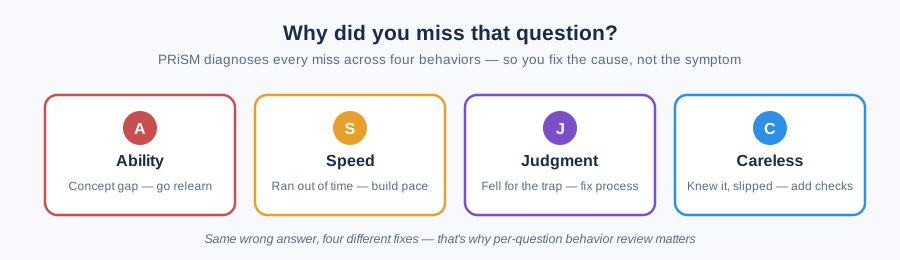
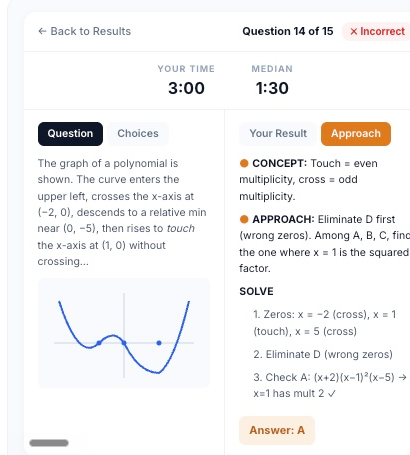
A five-step analytics loop then turns those diagnoses into action: pinpoint weaknesses, build a roadmap, practice strategically, track accuracy in real time, and verify the improvement before test day. Every question comes with a per-question behavior review and a walkthrough solution.
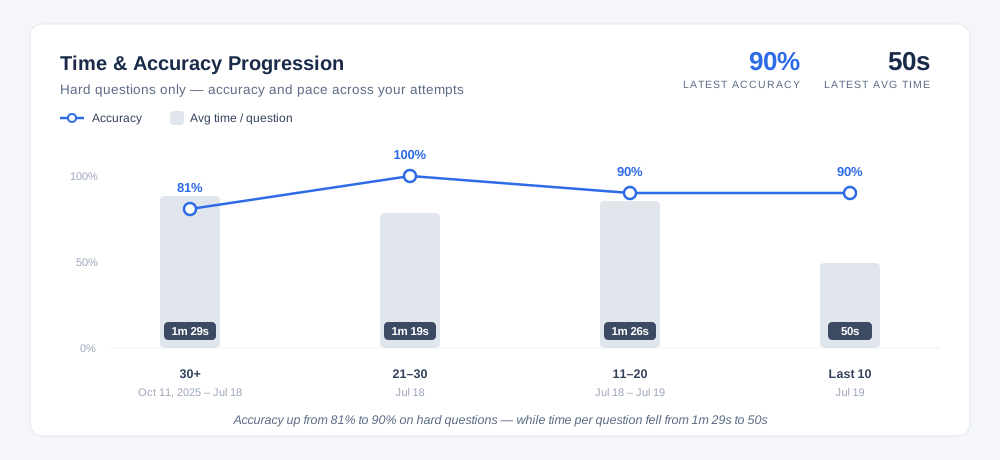
Here’s the kind of story this data tells. One of our students watched his hard-question accuracy rise from 81% to 90% over successive attempt windows — while his average time per question dropped from 1:29 to 50 seconds. When speed and accuracy improve together, that’s not luck; that’s cemented mastery, and the dashboard proves it.
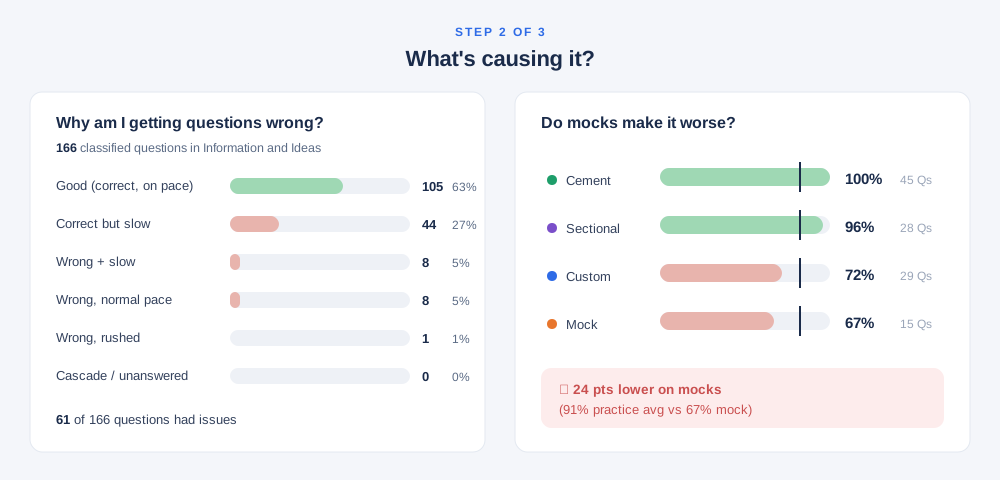
The same dashboards also catch what students can’t see themselves. This student’s practice accuracy averaged 91% — but under mock conditions it fell to 67%. PRiSM flags that 24-point pressure gap explicitly and shows the underlying pattern (27% of his attempts were correct but slow). The fix isn’t another lesson; it’s timed, test-condition practice. That’s the difference between analytics that report and analytics that coach.
Cementing, with thresholds that mean something
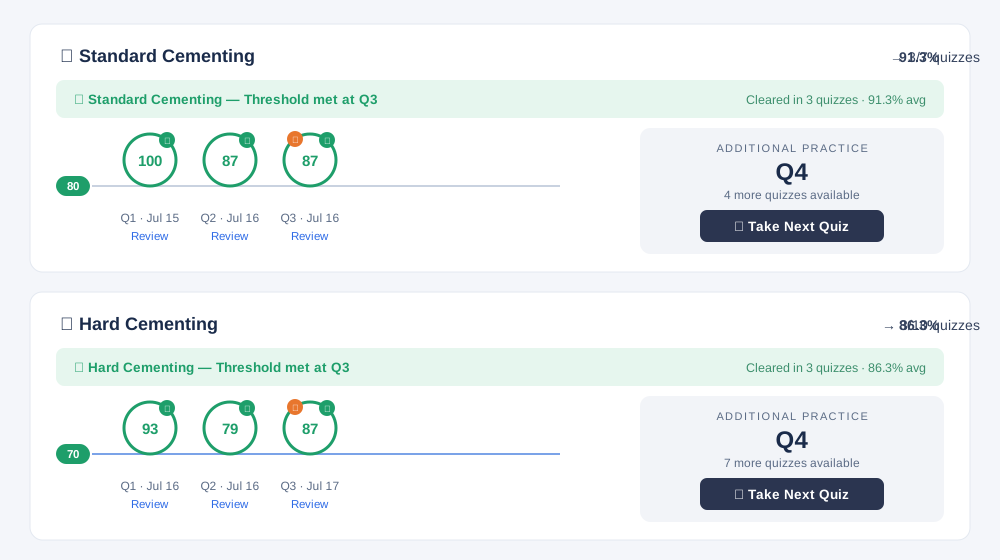
Our alumni know we never let “I watched the lesson” pass for mastery. On PRiSM, cementing uses rolling-average mastery: students clear a Standard track at 80% accuracy, then a Hard track at 70% on the toughest questions in the bank. Only then does a skill count as done.
A brand-new platform — not e-GMAT reskinned
PRiSM runs on an entirely new platform we designed to be self-paced and self-explanatory — a teenager should be able to drive it without a manual, and parents should be able to read it at a glance. As students complete milestones, the platform adapts around them: next steps, revision priorities, and projected finish dates all update automatically. The student always stays in control.
The content behind it: 1,000+ concept lessons, 14,000+ practice questions — roughly 10× the official Bluebook bank — and a custom quiz builder spanning 200+ skill topics. Explore the platform in detail here.
And because we hold ourselves to outcomes, PRiSM carries a score guarantee of up to +160 points, with no cap below 1600.
Try everything — free for 7 days
We want every family in the e-GMAT community to see this for themselves, so we made the trial radical: the entire course is free for 7 days — every lesson, every mock, every analytic. No credit card required. Take the PACE diagnostic, sit a full-length adaptive test, and read your own four-way diagnosis before spending a rupee or a dollar.
Start the free 7-day trial →When you’re ready to continue, there are two simple plans — one of which includes 20 one-to-one mentoring sessions with our team. For SAT strategy content in the meantime, we’re publishing regularly on the PRiSM blog.
Fifteen years of e-GMAT, distilled into a new beginning. We’d love for your family to be part of it.